Who Will Teach the Trades?
A record surge of students is pouring into the skilled trades — and there aren't enough instructors to teach them. Inside America's HVAC enrollment boom, the veteran-retirement bottleneck throttling it, and why the fix is applied training that no longer needs a scarce teacher in the room.
Enrollment in two-year HVAC programs has jumped nearly 30% in a single year — and roughly 62% since 2020 — yet at least 26 states now report shortages of the very instructors needed to teach these students. In analyzing the latest landscape, I have observed a dramatic surge in trade-school enrollment, with college-level HVAC program numbers climbing by nearly 30 percent. This influx of eager minds has exposed a severe bottleneck: a critical shortage of qualified instructors. As veteran technicians retire, there are fewer experienced professionals left to teach the next generation. Synthesizing the industry data, the solution becomes clear — a shift away from lengthy classroom lectures toward highly applied, efficient training that delivers targeted, job-ready skills.
The Trades Are Back
For decades the cultural script sent nearly every capable teenager toward a four-year degree and treated the trades as a fallback. That script is finally breaking. Enrollment in two-year HVAC programs climbed from roughly 20,150 students to nearly 26,000 in a single year — an increase of almost 30% — and HVAC enrollment at public two-year colleges has grown about 62% since 2020, according to the National Student Clearinghouse Research Center. The surge is broader than one trade: total enrollment at vocationally focused schools rose 13.6% to about 923,000 in a single year, on top of a 16% jump the year before. A generation that watched older siblings graduate into debt and uncertain office work is choosing tools — and choosing them on purpose.
A Demand That Cannot Be Outsourced
The timing could not be better, because the work is waiting. The U.S. Bureau of Labor Statistics projects HVAC employment growing about 8% between 2024 and 2034 — much faster than the average occupation — with roughly 40,000 openings every year, most of them created by retirements rather than new positions. The gap is already painful: the industry is estimated to be short around 110,000 technicians, and the number of certified techs has fallen by roughly half over the past decade. Every building with people inside it needs heating, cooling, or ventilation, and none of that can be shipped overseas or handed to a chatbot. Wall Street has noticed — BlackRock recently launched a $100 million initiative that names HVAC technicians among the skilled workers it wants to fund — and inside the field, the technicians who keep data centers and hospitals running are now among the highest-paid and most sought-after workers in the country.
The Bottleneck Nobody Saw Coming
Here is where the story turns. A flood of motivated students and a mountain of open jobs should be a happy equation. Instead, it has exposed a second shortage hiding behind the first: there are not enough people left to teach. For the 2025–26 year, the U.S. Department of Education reported that at least 26 states are experiencing shortages of Career and Technical Education instructors. The demographics are unforgiving — BLS estimates that nearly 40% of the skilled-trades workforce will be eligible to retire within the decade, and every veteran who walks off the job takes decades of hard-won knowledge with them. As one national training manager put it, the industry now has a technician shortage on one side and an equal instructor shortage on the other. The pay gap makes it worse: a working technician often out-earns the salary a school can offer to teach, so the best candidates for the classroom are exactly the people who can least afford to be in it. Programs describe leaving positions open for six months or more — not for lack of students, but for lack of a qualified professional willing to fill the role.
The Old Model Is the Wrong Model
If the constraint is the human instructor, then the way we have traditionally trained becomes the problem. The industry's own voices are increasingly blunt about it: many trade schools, they argue, have quietly copied the worst habit of the four-year university — too much theory delivered in long lectures, and not nearly enough time with tools in hand. Trainers describe students who can recite the refrigeration cycle but have never worked on a furnace that actually fired, or diagnosed a system that was truly broken. The corrective is applied, efficient instruction that teaches a learner precisely what the job requires, in the order the job requires it, and lets them practice until it sticks. Honesty demands a caveat the hype usually skips: no program turns a beginner into a seasoned technician overnight. Real competence is still a years-long apprenticeship of supervised field time and judgment. Applied training does not replace that road — it clears the on-ramp, so a motivated person can arrive at their first job already fluent in the fundamentals.
The Answer That Doesn't Depend on a Scarce Instructor
Once you see the bottleneck clearly, the shape of the solution follows. If the limiting resource is qualified human instructors, then the fix cannot be one that requires more of them. It has to be instruction that scales without a scarce teacher in the room: a complete, applied curriculum a learner can move through at their own pace, paired with a tutor available at any hour, in any language, that never retires. That is precisely the model Global Sovereign University was built to prove. A learner can read the entire HVAC Apprentice's Field Guide free, ask GENO — a 24/7 AI tutor — to explain any chapter in any of 83 languages, practice on a live simulator, and earn a free certificate of comprehension before ever paying for an exam. It does not replace the mentor on the jobsite or the field hours that make a master; it replaces the classroom the country can no longer staff. When the teacher is the bottleneck, an instructor that never sleeps, never leaves, and costs nothing is not a gimmick — it is the most direct answer available.
Key Terms — The GSU Dictionary
The Instructor Bottleneck. The second, hidden shortage behind the trade-labor shortage: too few qualified professionals willing or able to leave the field and teach the surge of incoming students.
Applied Training. Instruction organized around the tasks a job actually requires — learned by doing and repeating — rather than theory delivered in long lectures ahead of any hands-on practice.
The EAR Framework. Electrical, Airflow, Refrigerant — the disciplined order in which a working technician diagnoses a system, checking the first two before condemning the third.
The A2L Transition. The 2025–26 industry shift to lower-flammability A2L refrigerants such as R-32, which changes tools, leak detection, and safety practice across the trade.
Selected Sources
U.S. Bureau of Labor Statistics (Occupational Outlook, HVAC mechanics and installers); National Student Clearinghouse Research Center (enrollment data, 2024–2025); U.S. Department of Education (CTE teacher shortage areas, 2025–26); ACHR News and allied industry reporting; and the workforce analysis compiled for the GSU HVAC dossier.

Ask GENO: "Explain superheat and subcooling like it's my first day" or "Walk me through the EAR diagnostic order" — GENO is GSU's friendly AI tutor. He's read the entire HVAC Apprentice's Field Guide and answers in 83 languages, 24/7.
- The article calls the instructor shortage "the bottleneck nobody saw coming." Explain how a surge in student enrollment can actually deepen a workforce shortage rather than solve it.
- The industry's own voices argue the fix is "applied, efficient training." What is the honest limitation of that fix that the article insists on naming — and why does it matter?
- Why can an AI tutor paired with a free open curriculum address the instructor bottleneck in a way that building more traditional classrooms cannot?
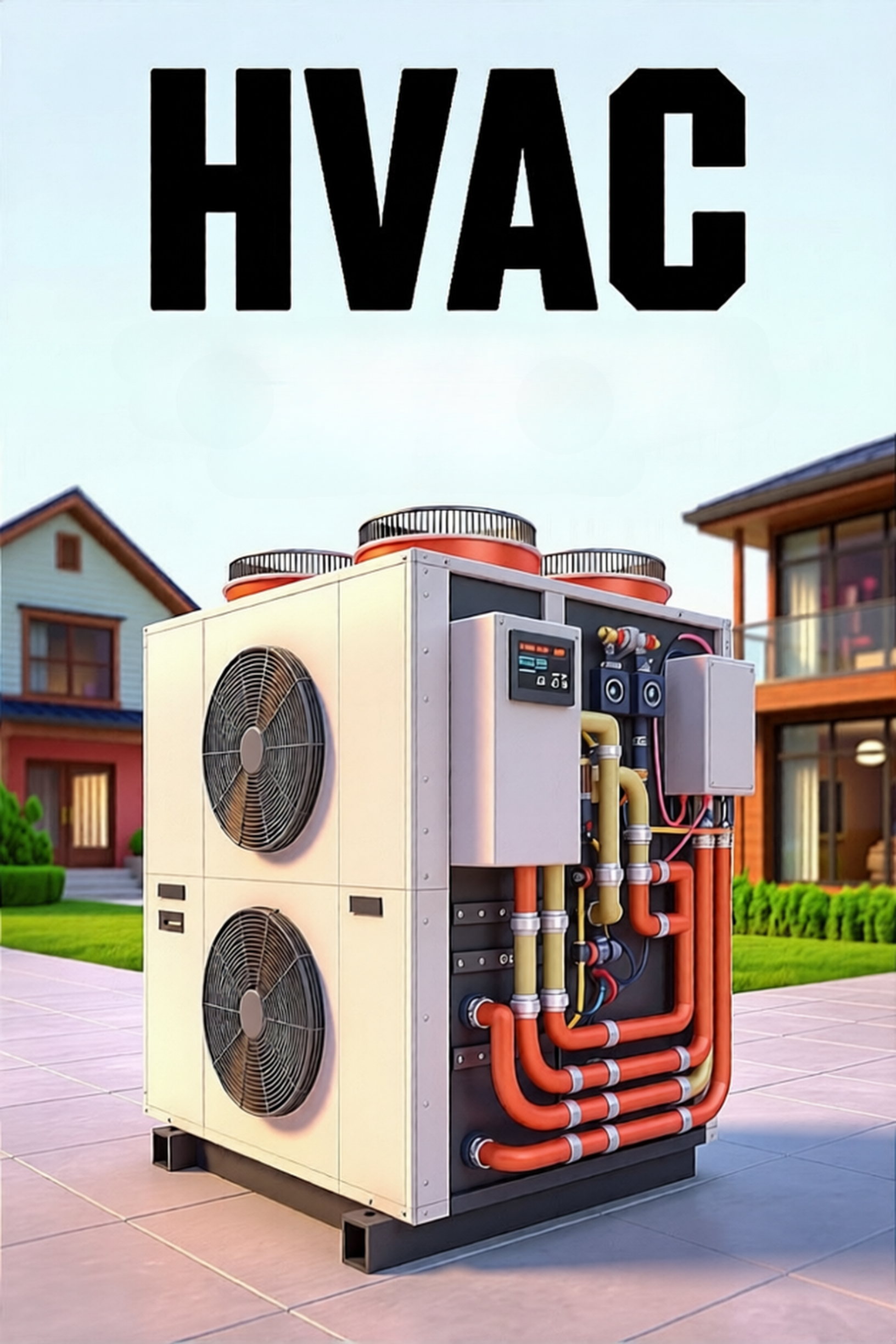
All twelve chapters — thermodynamics to heat pumps to the A2L transition — free to keep and free to give away. No login, no cost, ever.
Download the Free PDF → Prefer Kindle? Support the mission for $3.99 on Amazon →